The August jobs report was covered for two numbers. Payrolls rose by 162,000, and the unemployment rate held at 4.1 percent (BLS: Employment Situation, August 2026).
Both are small moves. The large one sat in a paragraph further down.
What actually moved
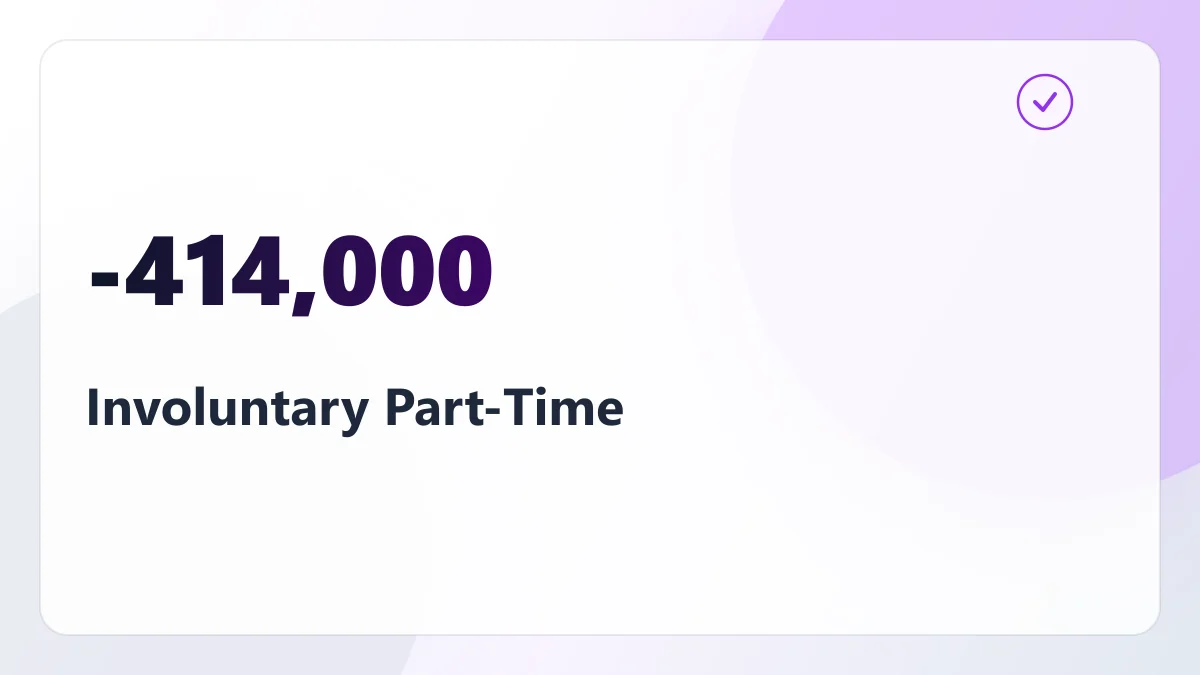
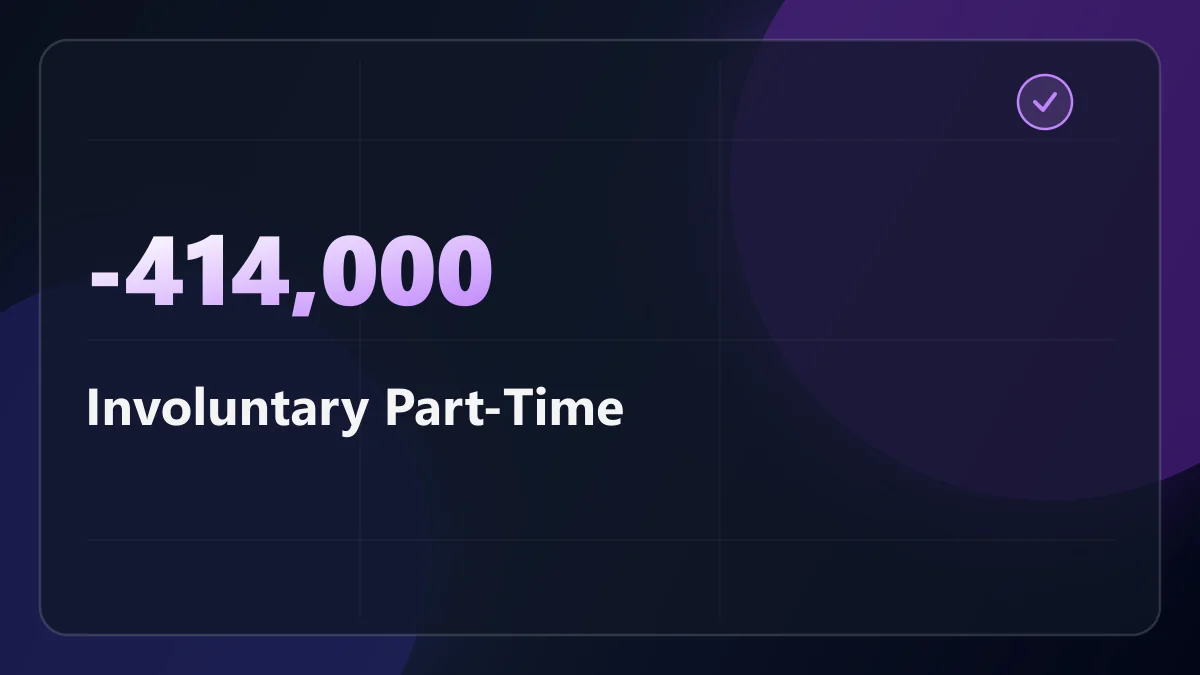
“The number of people employed part time for economic reasons decreased by 414,000 to 4.4 million in August” (BLS: Employment Situation, August 2026).
The category is precise about who it counts. These are people who “would have preferred full-time employment but were working part time because their hours had been reduced or they were unable to find full-time jobs” (BLS: Employment Situation, August 2026).
So it is not a measure of how many people have work. It is a measure of whether the work people have is the work they wanted, and it moved further in one month than the headline figures did.
What did not move
The rest of the slack measures sat still, which is what makes the drop worth a second look rather than a headline of its own.
The number of people not in the labor force who currently want a job “changed little at 5.7 million” (BLS: Employment Situation, August 2026). The marginally attached “changed little at 1.7 million”, and discouraged workers “changed little in August at 441,000” (BLS: Employment Situation, August 2026).
Labour force participation edged up to 61.6 percent (BLS: Employment Situation, August 2026), which rules out the least happy explanation. A fall in involuntary part-time work alongside falling participation would suggest people giving up. That is not the shape here.
One month is one month, and a single survey move of this size can be noise. The way to find out is whether September holds it, and that release lands on 2 October.
The revisions nobody mentioned either
Two prior months were marked up. “The change in total nonfarm payroll employment for June was revised up by 11,000, from +20,000 to +31,000, and the change for July was revised up by 44,000, from -23,000 to +21,000” (BLS: Employment Situation, August 2026).
July was reported as a month when the economy shed jobs. It was not. That is worth remembering the next time a first-print number is treated as a verdict, including the one that will arrive in October.
Why this number matters more than payrolls if you work for yourself
Involuntary part-time workers are the population most likely to be looking for contract and freelance work to close the gap between the hours they have and the hours they need. When that count falls sharply, fewer people are doing that.
That is the reason to watch this line rather than the payroll figure, which counts jobs without saying anything about whether the people in them are looking for more. Watch it as a signal about who else is bidding, not as a promise about rates. One month does not establish a trend, and this report does not price anyone’s work.
If you are setting or revisiting a rate this quarter, the freelance rate calculator does the arithmetic from your own cost base rather than from the labour market, which is the right order to do it in. And if this is the year the freelance income becomes the main income, the quarterly obligation that comes with it is priced by the 1099 tax estimator, with the deadline itself covered in the September 15 estimated tax guide.
The next reading is on 2 October. If the 414,000 holds, August was a turn in job quality that nobody reported. If it snaps back, it was a survey wobble, and the payroll number everyone did report will still have been the least interesting thing in the release.
