If the mood at your company’s last all-hands felt off, you were not imagining it. The first week of August was one of the busiest layoff stretches of the year, and it did not come from struggling startups. It came from names you use every week.
Start with the roll call. Zillow cut more than 500 people, about 7% of its workforce, on August 4, with CEO Jeremy Wacksman telling staff the company is “ensuring we have a disciplined cost structure and getting more efficient” (Fast Company). A day later TikTok closed its Nashville content-moderation office and let 250 people go, Etsy cut around 220 from product and engineering, and Google filed notice for 52 roles in Washington state (Fast Company). Four companies, one week.
Painful, but a bad week is just a bad week. What makes this one different is where it leaves the year’s running total.
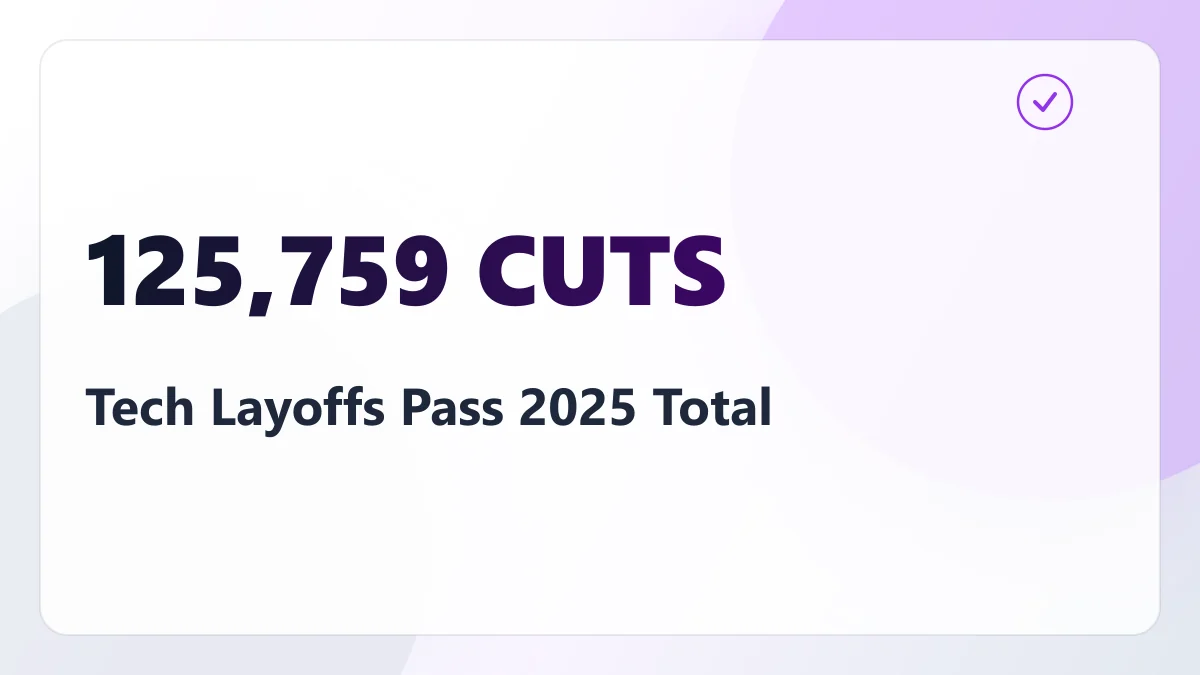
Through August 6, tech employers had announced 125,759 layoffs across 264 companies in 2026 — more than the 122,606 people cut in all twelve months of 2025 (Fast Company). Seven months of 2026 have now outdone the whole of last year, and August, September, October, November and December are still on the board. That is the milestone. Nobody wanted it, and it arrived early.
What companies say is behind it, and what they don’t
Listen closely to the announcements and you hear two different scripts. Oracle cut 21,000 jobs in June and said plainly that the “adoption and deployment of AI technologies” had resulted in reductions, and Amazon told staff back in January that using “AI extensively” should “reduce our total corporate workforce” as it cut 16,000 roles (TechCrunch).
Then there is the other script. Etsy CEO Kruti Patel Goyal insisted the August cuts “weren’t driven by AI” and that the company’s future “depends on the creativity, judgment, and expertise of our people” (Fast Company). Monday.com co-founder Eran Zinman said his company’s July cut of roughly 600 people, a fifth of its workforce, “was not made to reduce costs or replace people with AI” (TechCrunch). Microsoft split the difference in July, cutting 4,800 people while saying they were “not being replaced by AI” even as “AI is changing how work gets done” (TechCrunch). TechCrunch counts more than 20 major employers in 2026 whose layoff announcements mentioned AI one way or the other (TechCrunch).
Look at who is being cut and a pattern emerges that the press releases skip. TikTok’s 250 were content moderators, work the company has been shifting to automated systems for years (Fast Company). When Cloudflare cut 1,100 roles in May, its leadership said the “vast majority” of those eliminated “were measurers,” meaning layers of middle management (TechCrunch). Moderation, coordination, reporting: the roles disappearing fastest are the ones that sit between the work and the decision.
You do not have to decide which script is true. The useful signal is that both kinds of company, the ones crediting AI and the ones denying it, are cutting at the same time. That points to something broader than any one technology story: boards across the industry have decided smaller headcount is the shape of the next few years, and each company is choosing its own way to explain it.
So what do you do with that if you work in tech, or want to?
Treat the total, not the individual announcement, as your planning signal. A year that beats the previous year’s layoffs by early August says the cutting is systemic, so the time to update your resume, warm up your network and learn where you stand on severance is before a memo lands, not after. And there is a genuinely bright spot buried in the same gloomy data: hiring has not stopped, it has moved. The same week these cuts landed, LinkedIn’s economists were reporting record demand for one specific kind of role, which we cover in the fastest-growing entry-level job in America.
The bottom line: 2026 broke 2025’s full-year layoff total with four months to spare, the explanations differ but the direction doesn’t, and the workers who come out ahead will be the ones who read the total early and moved first. You just did the first part.
